Thursday, January 4, 2007

Jaguar C-XF Concept


The car that will define Jaguar's design direction for the next decade


If you're given to thinking that Jaguars are all about retro-conservatism then think again. The striking Jaguar C-XF concept car, which will make its public debut at the Detroit auto show, reveals Jaguar's design direction for the next decade or more. It offers a clue, not just to the appearance of the forthcoming S-Type replacement — the XF — but also to the next generation of the XJ luxury sedan. The C-XF could prove to one of the most important unveils in Jaguar's roller-coaster history.We were invited to a private viewing of the car near Jaguar's English headquarters. Here's what we learned.

The background

In the 1990s, Jaguar's design language was deliberately conservative. The company's management believed customers in overseas markets — especially Japan and the U.S. — expected a steady evolution of design themes that had begun in the '60s. While Chris Bangle was revolutionizing BMW's design language, Jaguar's design director, Geoff Lawson, produced a series of cars — the X-Type, S-Type and XJ — that looked like they belonged to a different era.The strategy has proved a disaster. The current XJ is technically accomplished, but customers have been put off by its same-again aesthetics. This year, to the end of November, Jaguar had sold just 11,195 XJs globally. Jaguar's total U.S. sales are down 31.6 percent to just 19,130 units in the same period.

The sea change

Jaguar's new design team makes little secret of their dislike of the current sedan range and the company's dire sales performance has given them license to effect a dramatic transformation. The handsome
Jaguar XK coupe was the first evidence of this sea change and now the C-XF throws down a marker for the next-generation sedans.The responsibility for redefining Jaguar's styling has fallen to Ian Callum, the talented Scot who penned the current Aston Martin range, and the latest Jaguar XK. "This is about re-establishing Jaguar," he says. "We need to get back to what Jaguar is all about. There is no need to reinvent ourselves." According to Callum, a Jaguar should "evoke instant desire" and "make people stop and pay attention. The values that I see in Jaguar aesthetics include purity, dynamism, latent power, balance and modernity."Callum reckons that the last significant step in Jaguar's design history was in 1968. "Jaguar design leveled off in the 1970s and '80s. With the C-XF, I have imagined where Jaguar would have been if we had continued the rate of change shown in the 1950s and '60s."The designer dismisses claims that the C-XF is radical. "It's not radical, it's right. Jaguars should be seen as modern cars; Jaguar has to shout louder."

Four-door coupe

The C-XF is a four-door coupe in the manner of the
Mercedes CLS. This is in contrast to the production Jaguar XF, which will be a more conventional four-door sedan when it's unveiled at the Frankfurt auto show in September. The production version will not only replace the S-Type in the Jaguar lineup, it will define Jaguar's design direction for the next decade.Arguably the most controversial element is the grille, which is recessed back into the bodywork. "It's the classic 'car in the rearview mirror' look, with everything powering rearwards from the grille," explains Callum. This grille is framed by narrow, aggressive-looking headlights that eschew the circular motif of the current sedan range. The lenses contain a subtle, abstract Jaguar leaper logo, which is repeated on the door sills and the tread pattern of the bespoke 21-inch Pirelli tires. These details will be toned down for production cars but the dramatic shoulder line, which flows from the base of the windows into the haunch above the rear wheel, will feature prominently. "The lines must look spontaneous," says Callum, "and a single line must define what the car does."We can also expect to see shapes that taper dramatically from the C-pillar rearwards. This is a feature of the XK coupe that will also define the sedans. It is critical to Callum's interpretation of "athleticism." "The exterior skin is tight to the package, creating a feel of latent power."The overall effect is certainly bold and two-dimensional photographs do not do justice to the car's proportions, which really do suggest power and athleticism. Some of Jaguar's current customers will question whether it's true to the marque, but Callum is unconcerned. "It is an exaggerated vision of the future. It doesn't matter if people don't recognize it as a Jaguar, it will become a Jaguar."

Even more radical inside

Even more radical than the exterior, the interior gives less of a pointer as to how the Jaguars of tomorrow will look. Occupants sit ensconced in a "cockpit," with the high-set, aluminum center console flowing around them. There are four individual sports seats, with enough room in the rear for a pair of 6-foot adults.The cabin offers a reinterpretation of the classic wood and leather themes. Carbon-fiber-pattern leather is used in partnership with semi-aniline hide on the seats. Elements of the doors and transmission tunnel have been carved from poplar wood and then scorched by the artist Clive Sheridan, to create a satin feel. "Jaguar is recognized for tailoring cars in wood and leather, but we have turned that on its head by treating these traditional materials in an unusual and contemporary fashion," says Alister Whelan, one of the designers responsible. There is no visible stitching on the seats or fascia. "This creates the impression that the interior is wrapped in leather," explains Whelan.

Innovation

A concept car wouldn't be a concept car without a couple of high-tech trinkets. "We wanted to create a sense of theatre," says Callum, "but we also wanted to show a sense of humor. British humor is very tongue-in-cheek — we don't take ourselves too seriously."Evidence of this humor is provided by the starting sequence. Jump into the driver seat and the Power button pulses on the center console, representing the "heartbeat" of the car. Prod the button and concentric rings withdraw to leave the gear selector in your hand. At the same time, beams of blue light emanate from the instrument panel and the front grille, marking the moment at which the engine is brought to life. "We want Jaguars to feel like they are coming to life when you start them," says Whelan.Other novelties include JaguarSense, which activates the interior door handles when an occupant sweeps their hand across the fascia. A dual-view screen system allows the driver and passenger to view two different images simultaneously, while the centrally mounted rev counter responds to the way in which the car is being driven. If the driver selects Dynamic mode, the rev counter motors outwards, increasing its prominence.It's all good fun, but don't expect to see any of these features on the production XF.

The grunt

The C-XF is no dummy. Under the hood is a tuned version of the
Jaguar XKR's 4.2-liter supercharged V8. It delivers in excess of 420 horsepower and 368 pound-feet of torque and could, in theory, power the concept to 180 mph. The only significant novelty under the skin is a carbon-fiber sleeve for the electrical wiring.Behind the engine is the same six-speed automatic transmission that partners with the V8 in the XKR.

Final thoughts

Jaguar is certainly not the first manufacturer to talk of a design-led revolution, but no one should doubt the determination of Callum and his team. Ironically, the company's parlous condition has given them a unique opportunity to re-establish a once fabled marque. The production cars won't be as radical as the C-XF but they will be modern, and Callum is confident that the new XF is a "damn good-looking car." If enough people share his vision, then Jaguar is at the start of a long road to prosperity.

Rallye Automobile Monte-Carlo 2007

WRC fans of the world unite!

it will be kicking start again in Monte-Carlo... 19 - 21 January 2007

Before the start of the World Rally Championship season, the FIA confirmed the car numbers of the teams competing in the manufacturers' championship.Each team must select a number one driver for the entire season. At Citroen, Sebastien Loeb will keep the number 1 on his car and his teammate will use number 2.No changes at Ford: Marcus Gronholm's Focus will have the same number 3 on its sides and Mikko Hirvonen will also keep number 4.Petter Solberg will no longer use number 5, this year Manfred Stohl will be the one using this number. The Subaru team will switch to number 7 and 8 for Petter Solberg and Chris Atkinson.Solberg will probably not miss number 5. For the past two years, the Norwegian didn't have much success with this number while he won the championship in 2003... with number 7 on his Impreza!

The official list of teams for the 2007 World Rally Championship

1 CITROËN TOTAL WRT Sébastien Loeb
2 CITROËN TOTAL WRT
3 BP - FORD WORLD RALLY TEAM Marcus Grönholm
4 BP - FORD WORLD RALLY TEAM
5 OMV KRONOS CITROËN WRT Manfred Stohl
6 OMV KRONOS CITROËN WRT
7 SUBARU WORLD RALLY TEAM Petter Solberg
8 SUBARU WORLD RALLY TEAM
9 STOBART M-SPORT FORD WORLD RALLY TEAM
10 STOBART M-SPORT FORD WORLD RALLY TEAM
11 MUNCHI'S FORD WORLD RALLY TEAM
12 MUNCHI'S FORD WORLD RALLY TEAM

Ford Focus RS spyshot

Don’t be fooled by the looks of this test car. It is not the ordinary Ford Focus ST but the brand-new Focus RS. Looking closer at the front end one can see the bigger air intakes and the driver helps drawing the photographers attention by giving him the finger and putting his foot down. The sound of the 300-bhp engine was unmistakable, just like the car’s fast acceleration with four-wheel-drive and the rally-like sound of that dump valve while shifting gears. Add some wide fenders, a more aggressive front end styling and you have the Focus RS, a true competitor to the upcoming EVO X.

Come on Ford, green light it for production, you just got the WRC Manufacturer Title 2006, don't you? It's time to debut a kick-assed rally replica in the Evo and WRX STi world.

Nissan Tiida Sports Concept


Nissan will give a hint to the imminent expansion of its sports car line-up with the Sports Concept at the 2005 Sydney motor show.

Based on the Tiida production car that arrives early next year to replace the Pulsar (the Pulsar name is being killed off in the process) the Sports Concept boasts a sleek, lightweight three-door body constructed of conventional steel and carbon-fibre composite.

The pearlescent white paint – the latest in a string of white concept cars – adds visual flair to the eye-catching show car.
Large spoilers - including a prominent wing mounted on the rear hatch – and massive 20-inch wheels give the car what Nissan describes as "an animated, video game-like stance".

Inside, the Tiida has more than a passing resemblance to race cars, starting with the four-point seatbelts. Four bucket seats kick-off the sporty flavour, while things like the prominent tachometer and distinctive instrument cluster continue it throughout the cabin.

Something sure to impress the iPod-using Generation Y brigade is the big subwoofer on the rear dash – designed to give the sound system more oomph.

While Nissan hasn’t spelt it out, the Tiida Sports Concept is seen as a spiritual successor to the once-popular Pulsar SSS hot hatch that was dropped when the current (and ageing) Pulsar went on sale.

While it’s a concept for now, insiders suggest a production version of a sporty Tiida is a strong chance of eventually arriving in showrooms, albeit in a less radical form than the show car.
Still, if it eventually makes it into production, think of the Tiida Sports Concept as Nissan’s answer to cars such as the Mazda3 SP23 and the Ford Focus Zetec.

"It offers the look and feel of a sports tuned car, yet is conceived as an affordable, attainable vehicle for buyers entering the new car market for the first time," says the Nissan blurb.
Over recent years Nissan has been accused of having a thinning passenger car line-up and an even thinner array of performance cars, which can help boost a car’s image.

In the early 1990s the Nissan GT-R that dominated the touring car seen was a boon for Nissan’s image locally. It was followed by the popular turbocharged 200SX coupe, while the Nissan Pulsar SSS hot-hatch had been a stalwart of the brand until recent years.

However, with the GT-R brand set to be revived within a few years and Nissan focussing more heavily on aspirational models, the company is confident its image is headed in the right direction.

Japanese Sportscars Preview @ Tokyo Motorshow 2007


Honda NSX 2007 based on HSC Concept


Mazda RX-7 2007 based on Kabura Concept


Nissan GT-R 2007 based on GT-R PROTO Concept


Toyota Supra 2007 based on Lexus LF-A Concept


Mitsubishi Lancer EVO X 2007/2008Subaru Impreza WRX STi 2007/2008Note: The scooby (latter) finally evolved into a hot hatch

Wednesday, January 3, 2007

Alessi Automobili COTY 2006

Best Sub Minis
1st: Subaru R1 / R2
2nd: Toyota Aygo
3rd: Mitsubishi i

Best Minis
1st: Mini Cooper
2nd: Fiat Punto Grande
3rd: Suzuki Swift Sport

Best Family Hatches
1st: Alfa Romeo 147
2nd: Mazda 3 / Axela
3rd: Citroen C4

Best Family Sedans
1st: Mazda 3 / Axela
2nd: Honda Civic
3rd: Subaru Impreza

Best Family Estates / Station Wagons
1st: Renault Megane Grand Touring
2nd: Ford Focus Estate
3rd: Subaru Impreza Sportswagon

Best Family Saloons
1st: Subaru Legacy 2.0i
2nd: Ford Mondeo
3rd: Honda European Accord

Best Compact MPVs
1st: Ford S-Max
2nd: Mazda 5
3rd: Honda Edix / Stream / Airwave


Best Premium MPVs
1st: Mazda MPV
2nd: Honda Odyssey
3rd: Renault Espace

Best Premium Saloons
1st: BMW 3-Series
2nd: Alfa Romeo 159
3rd: Nissan Skyline (Infiniti G35)

Best Executive Saloons
1st: BMW 5-Series
2nd: Citroen C6
3rd: Mercedes CLS

Best Luxury Saloons
1st: Audi A8
2nd: BMW 7-Series
3rd: Mercedes S-Class

Best Ultra Luxury Saloons
1st: Bentley Continental Flying Spur
2nd: Mercedes S600
3rd: Maybach 57 / 62

Best Hot Minis (B-Segment)
1st: Mini Cooper S
2nd: Renault Clio RS
3rd: Peugeot 207 GT

Best Hot Family Hatches
1st: Volkswagen Golf GTi
2nd: Focus ST
3rd: Mazda 3 MPS / Mazdaspeed Axela

Best Hot Premium Hatches
1st: Ford Focus RS
2nd: Audi S3
3rd: Volkswagen Golf R32

Affordable Sports Saloons
1st: Mazda 6 MPS / Mazdaspeed Atenza
2nd: Subaru Legacy GT Spec B
3rd: Honda Accord Euro R

Mid-price Sports Saloons
1st: Subaru Impreza WRX STi
2nd: Mitsubishi Evolution IX
3rd: Lexus IS350

Premium Sports Saloons
1st: BMW M5
2nd: Audi RS4
3rd: Maserati Quattroporte

Best Mini Cabriolet Coupes
1st: Mitsubishi Colt CZC
2nd: Opel Tigra TwinTop
3rd: Nissan Micra C+C

Best Medium cabriolet coupes
1st: Nissan Z Roadster
2nd: Volkswagen Eos
3rd: Peugeot 307 CC

Affordable Coupes
1st: Honda Civic Coupe Si
2nd: Honda Integra Type-R
3rd: Toyota Celica

Mid-price coupes
1st: Mazda RX-8
2nd: Ford Mustang GT
3rd: Alfa Romeo Brera

Grand Tourers
1st: Ferrari 612 Scaglietti
2nd: Jaguar XKR
3rd: Bentley Continental GT

Affordable Sports Cars
1st: Mazda MX-5
2nd: Pontiac Solstice / Saturn Sky
3rd: Honda S2000

Mid-Level Sports Cars
1st: Lotus Elise / Exige / Exige S
2nd: BMW Z4
3rd: Audi TT

High-Level Sports Cars
1st: Porsche Cayman S
2nd: TVR Tamora / T350C
3rd: Ford Mustang GT500

Premium Sports Cars
1st: Porsche 911 GT3 / RS
2nd: Chevrolet Corvette Z06
3rd: TVR Sagaris

Super Sports Cars
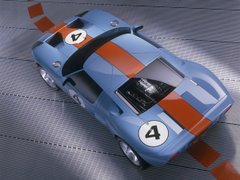
1st: Ford GT
2nd: Ferrari F430
3rd: Lamborghini Gallardo

Super Grand Tourers
1st: Ferrari 599 GTB
2nd: Aston Martin DB9
3rd: Porsche 911 Turbo

Exotic Supercars
1st: Pagani Zonda C12S / Zonda F / Zonda Clubsport
2nd: Ferrari Enzo
3rd: Porsche Carrera GT

biased? hell yes ;P


Hot Hatches Specs Comparison


Make / Model - Horsepower - 0 to 60mph - 0 to 100mph - Top Speed - Weight

Alfa romeo 147GTA - 250hp - 6.1s - 15s - 153mph - 1360kg
Audi S3 - 265hp -5.4s - n/a - 155mph - 1455kg
BMW 130i - 265hp- 5.8s - n/a - 155mph - 1375kg

Ford Focus ST - 225hp- 6.5s - n/a - 150mph - 1317kg
Ford Focus RS mk1 - 215hp - 5.9s - 14.9s - 144mph - 1278kg
Ford Focus RS mk2 - 300hp - n/a - n/a - na/ - n/a (upcoming)

Honda Civic Type-R - 200hp - 6.7s - 16.2s - 146mph - 1200kg
Honda Civic Type-R '07 - (198bhp) - 6.4s - n/a - 146mph - n/a (upcoming)
Mazdaspeed Axela - 263hp - 5.8s - 14.4s - 155mph - 1390kg

Opel Astra OPC - 240hp - 6.1s - 14.3s - 152mph - 1393kg
Opel Corsa OPC - 192hp - 6.8s - n/a - 140mph - n/a (upcoming)

Renault Clio RS - 197hp - 6.5s - 18.7s - 135mph - 1240kg
Renault Megane R26 - 230hp - 5.9s - n/a - 114mph - 1355kg

Renault Megane Sport - 225hp - 6s - 15.3s - 114mph - 1355kg
Seat Leon Cupra - 240hp - 6.1s - n/a - 153mph - 1334kg

Volvo C30 T5 - 220hp - 6.4s - n/a - 149mph - 1347kg
Volkswagen Golf GTi - 200hp - 6.5s - 16.4s - 146mph - 1328kg

Volkswagen Golf GTi Ed 30 - 230hp - 6.3s - n/a - 151mph - 1336kg
Volkswagen Golf R32 - 250hp - 6s - 15.5s - 155mph - 1538kg

What would you rather have? and why?